
Court Dismisses Bid to Block Fernandina Beach Paid Parking Ordinance
- Mike Lednovich
- Dec 31, 2025
- 2 min read

Updated: Jan 1
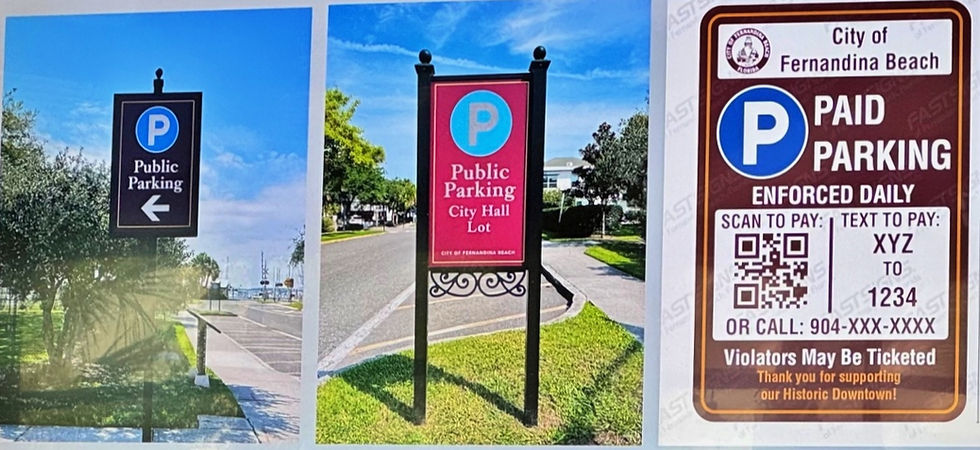
A Nassau County circuit judge Wednesday dismissed a lawsuit seeking to stop the City of Fernandina Beach from moving forward next week with a proposed paid parking ordinance, ruling that the challenge was premature and barred by separation-of-powers principles.
In an oral ruling issued today, Judge Marianne Aho granted the city’s motion to dismiss the amended complaint for an injunction filed by the Paid Parking political action committee, dismissing all five counts without prejudice and thus allowing the plaintiffs the option to file another amended complaint.

The lawsuit sought declaratory and injunctive relief to prevent the city commission from considering a second reading of the paid parking ordinance, which is scheduled for Jan. 6. If passed by the commission, the city would then proceed with the paid parking program in historic downtown.
The judge ruled that courts generally may not interfere with a legislative body before it has taken final action, noting that the paid parking ordinance has not yet been enacted and could still be amended or rejected.
Because the ordinance is not final, Judge Aho found that any ruling on its legality would amount to an advisory opinion rather than resolution of a concrete legal dispute. Florida courts are prohibited from issuing advisory opinions outside limited constitutional contexts.
The judge dismissed all counts on two independent grounds: separation of powers and jurisdictional advisory, separate independent basis.
In practical terms, the judge found:
The paid parking ordinance has not been enacted
Its final language is unknown
No one has yet been subjected to enforcement
Any claimed harms are speculative
The court did not reach the merits of the plaintiffs’ claims, including allegations related to religious freedom, land-use statutes, or emergency-management law.
City attorneys also argued that paid parking does not qualify as a land-development regulation under Florida law, a position the court accepted in dismissing claims brought under Section 252.422, Florida Statutes.
The ruling also canceled a previously scheduled evidentiary hearing Monday on the plaintiffs’ request for a temporary injunction. That hearing, which had been set for early January, will be formally canceled through a notice filed by city counsel.
The judge directed the city’s attorney, Sam Zestkind of the law firm Weiss Serota, to prepare a proposed dismissal order reflecting the court’s rulings and circulate it to opposing counsel before submission to the court. The dismissal will be entered without prejudice, meaning the plaintiffs may attempt to refile their claims if circumstances change.
Lawyers for the anti-paid parking group had argued that the city had already taken final legislative action by approving several resolutions in November authorizing a contract with a paid parking vendor and placing a referendum on the August ballot. City attorneys countered that the implementing ordinance itself has not yet been adopted and remains subject to legislative discretion.
The court agreed with the city’s position, concluding that judicial review must wait until a final legislative act occurs, if one does at all.


Comments